




HOW TO MEASURE YOUR CURTAINS
Follow the guide below to ensure a perfect fit.
How to Measure Curtain Size
Use this guide to measure your curtain size more accurately before placing a custom order.
The correct measuring method may vary depending on your installation type, such as ceiling-mounted,
wall-mounted, inside-frame, or outside-frame installation.
- Measure both the width and height carefully before ordering.
- Choose the measuring method that matches your installation style.
- Accurate measurements help your curtains hang neatly and function properly.
Preparation Before Measuring
- Use a metal tape measure for better accuracy.
- Make sure your curtain rods or tracks are installed before taking final measurements.
- Measure the full width and full height required for your curtain set.
- If your measurements are in inches or feet & inches, you can use our size converter to convert them into centimeters and meters.
Size Converter
Choose the unit you measured in, then enter the width and height. This tool converts your measurements into centimeters and meters for easier size checking.
Width
Height
Example: 100 inches = 254.00 cm = 2.5400 m.
Width
Height
Example: Width 8 ft 6 in = 259.08 cm = 2.5908 m.
Enter the width and height to convert the size.
Tip: This tool is for unit conversion only. Final size selection may vary by product type, such as curtains, tracks, Roman blinds, or other window coverings.
Measurement Guide When Rod or Track ls Not Installed
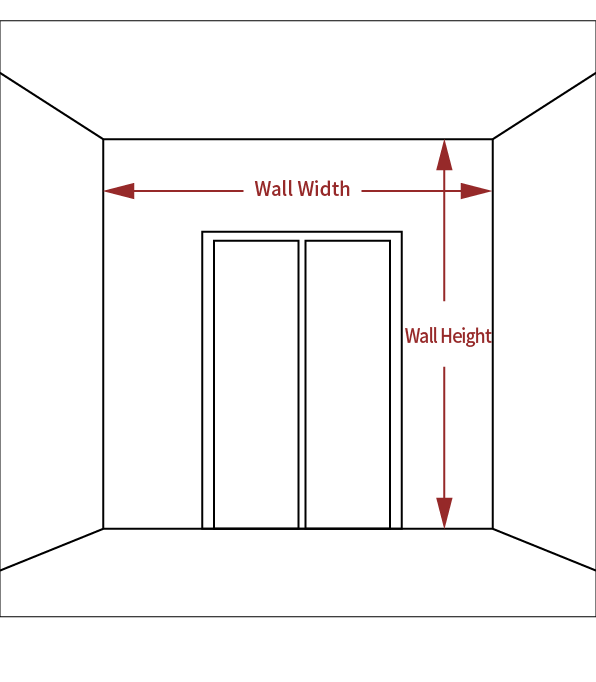
1. Full Wall Coverage
-
How to Measure:
Measure the full width and height of the wall -
Best For:
Ideal for large windows or full-wall coverage to enhance height and coverage -
Next Step:
Send your measurements to customer service for custom sizing advice
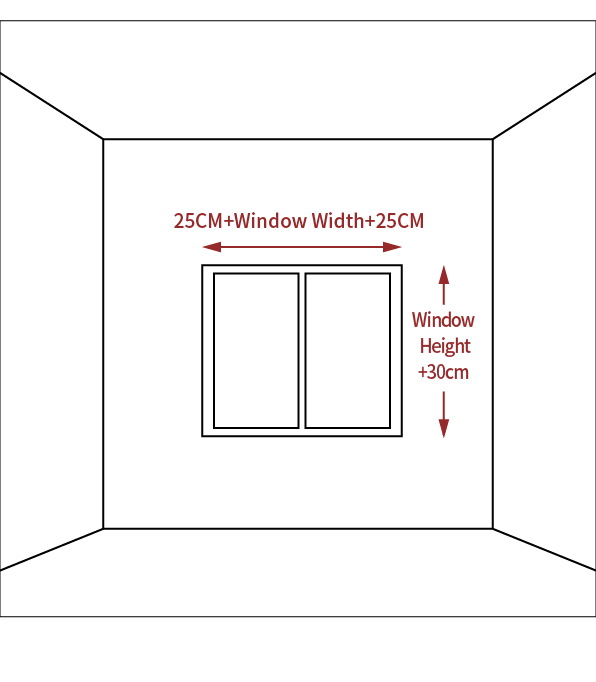
2. Window Coverage Only
- How to Measure:
Curtain width = Window width + 25 cm (≈ 10 inches) on each side
Curtain height = Window height + 30 cm (≈ 12 inches) - Best For:
Standard window coverage, ideal for customers who want precise window fitting without full-wall coverage - Next Step:
Send your measurements to our customer service team for tailored sizing advice
Measurement Guide for Hook-Style Curtains on Installed Rod or Track
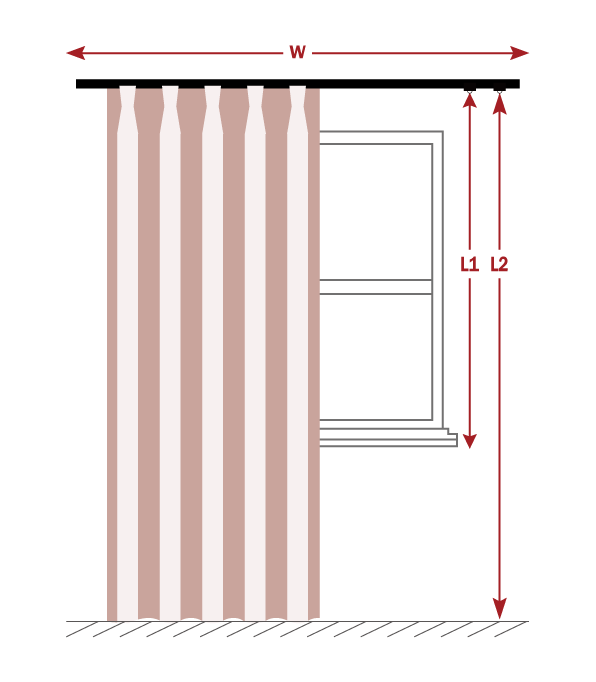
1.Hook Curtain Measurement for Installed Rod or Track
- Width (W)
Measure the net length of the installed Roman rod or track (excluding decorative ends).
This size is the basic reference value for calculating the finished curtain width.
Tip: Round to the nearest centimeter (or ½ inch) when measuring width. - Height (L1 / L2)
Measure from the hook connection point (i.e. the bottom of the Roman rod ring or the bottom of the track slider) to the desired drop position. -
L1 — Sill Height:
Measure to just below the window sill
▸ Suitable for installations that only cover the window without reaching the floor -
L2 — Floor Height:
Measure to the floor
▸ It is recommended to subtract 1–2 cm (≈ ⅜ to ¾ inch) from the measured height to avoid dragging and to ensure the curtain drapes naturally and neatly
2. Grommet (Eyelet) Curtain Measurement Guide
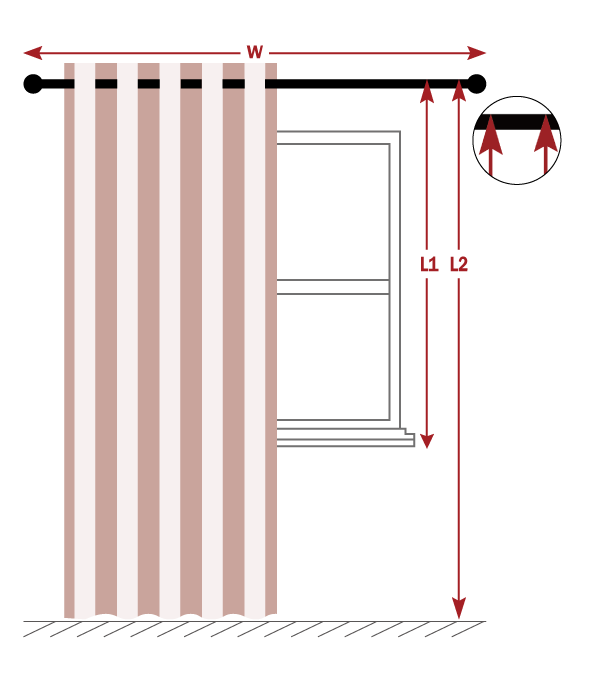
- Width (W)
Measure the net length of the installed curtain rod (excluding decorative finials).
This measurement is used as the base width to calculate the finished curtain size.
Tip: Round to the nearest centimeter (or approximately ½ inch) for accuracy. - Height (L1 / L2)
Measure from the top of the curtain rod to your desired drop point.
Since grommet (eyelet) curtains hang through rings over the rod, the curtain body naturally drops 3–4 cm (≈ 1¼–1½ inches) lower than the top of the rod.
So, always start your measurement from the top of the rod. -
L1 – Sill Length
Measure from the top of the rod to just below the window sill
▸ Suitable for non-floor-length curtains - L2 – Full Length
Measure from the top of the rod to the floor
▸ Recommended finished height = rod-to-floor measurement minus 1–2 cm (≈ ⅜–¾ inch) to avoid dragging and ensure a neat look
Curtain Fullness Ratio Comparison (1.8x → 3x)

1.8x Fullness

2.2x Fullness (Recommended)
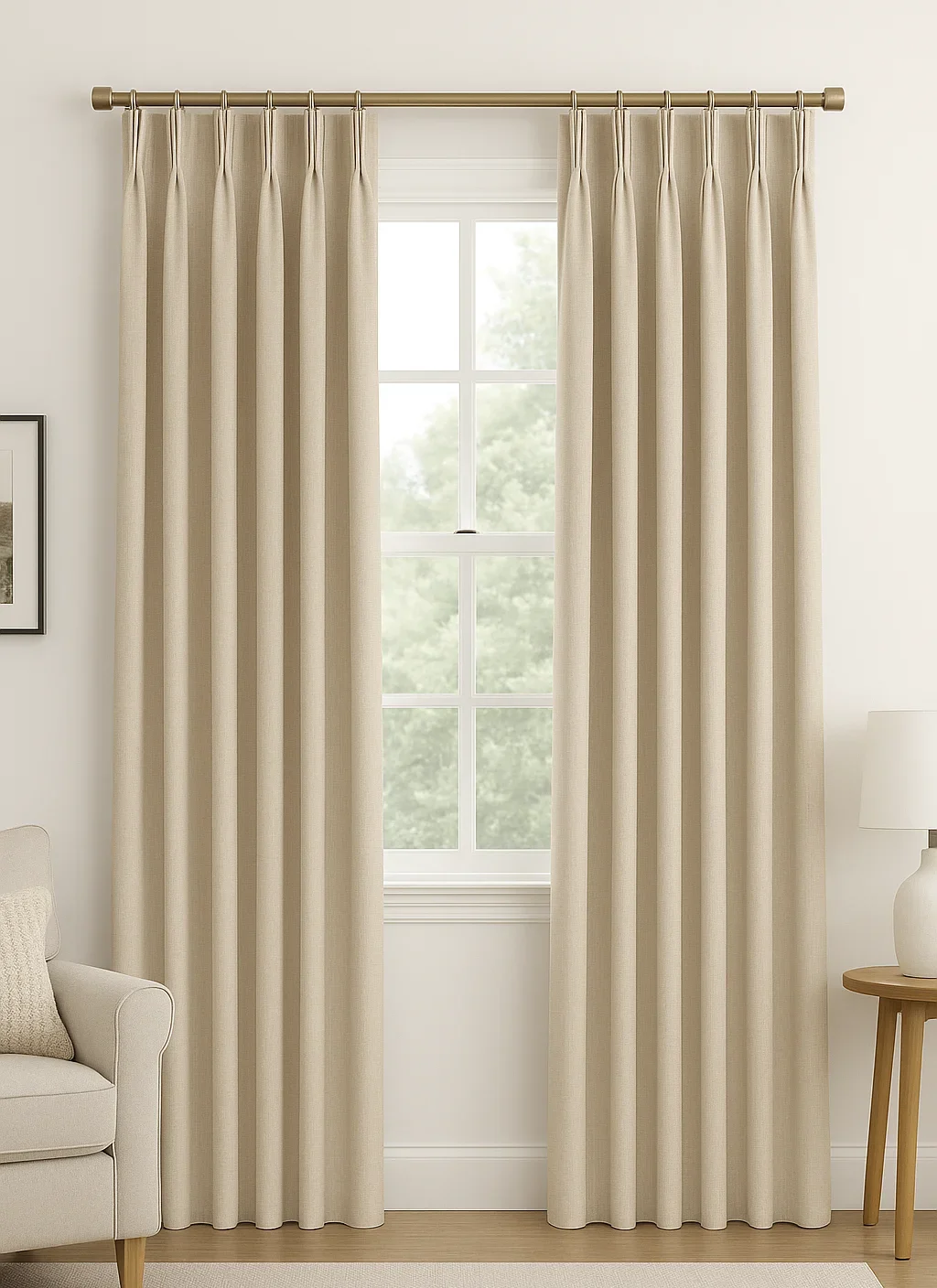
2.5x Fullness
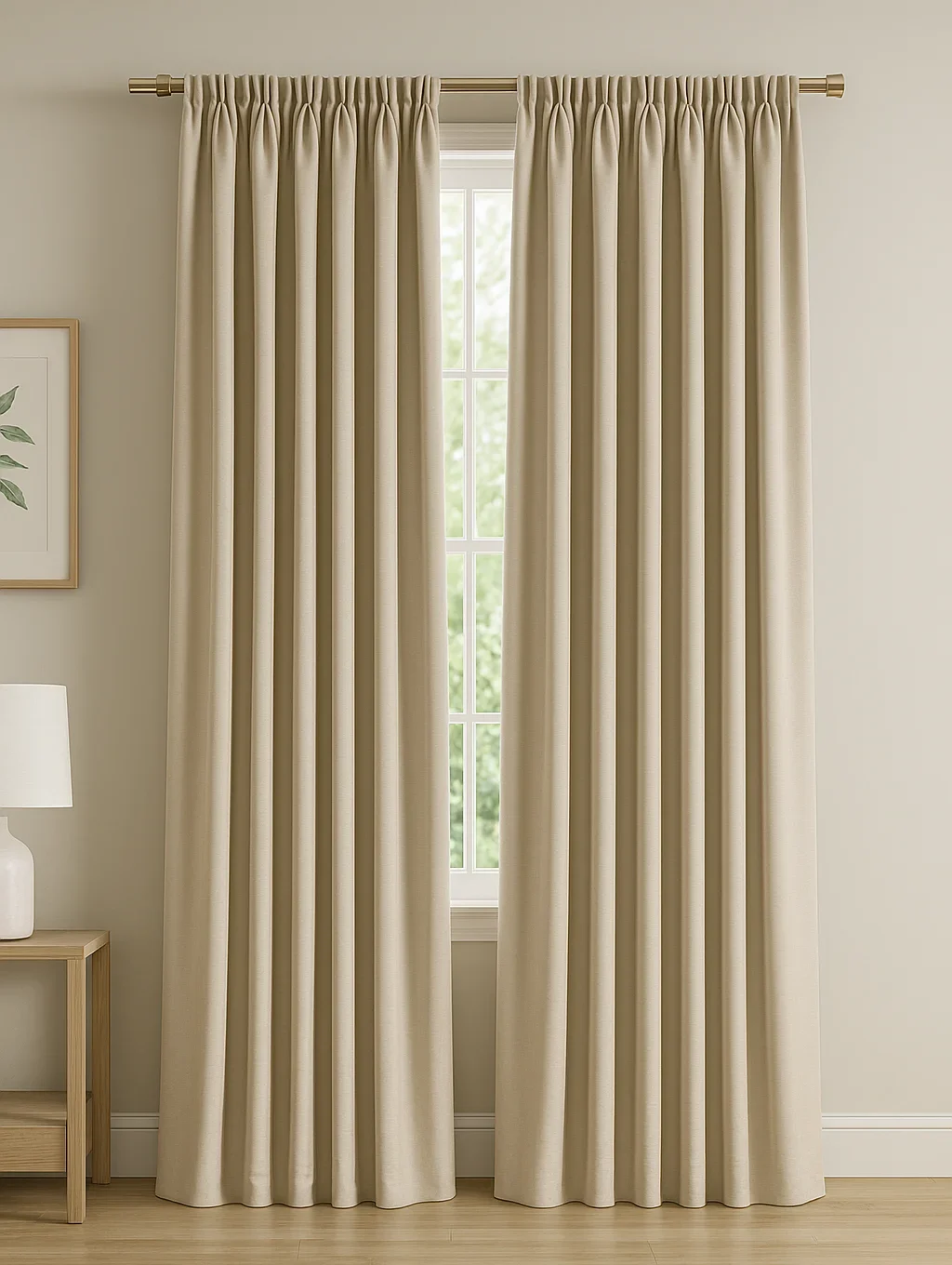
3.0x Fullness
1. Pleat Fullness
Pleat fullness refers to how much fabric is gathered to create the curtain’s folds.
It determines the visual richness and flow of the drape.
📏 How to Calculate It
Formula: Fullness Ratio = Total Fabric Width ÷ Track Width
Example:
Track width = 200 cm
2.2x fullness → 200 × 2.2 = 440 cm fabric
📐 Fullness Options
- 1.8x Fullness: Light and airy. Great for minimal or smaller spaces.
- 2.2x Fullness (Recommended): Balanced and elegant. Works for most rooms.
- 2.5x Fullness: Rich folds. Ideal for blackout fabrics or upscale settings.
- 3.0x Fullness: Deep, luxurious folds. Best for formal or dramatic looks.
💡 Why We Recommend 2.2x
We recommend a 2.2x fullness ratio for most custom curtains. It strikes the perfect balance between elegant appearance and material efficiency.
Compared to lower ratios like 1.8x, it provides a fuller and more premium look. Higher ratios such as 2.5x or 3.0x offer more dramatic volume, but may not suit every space or budget.
That’s why 2.2x is our go-to standard — refined, versatile, and widely loved by both designers and homeowners.
FAQS
Do I need to round my measurements?
Yes. Please round the width to the nearest whole centimeter (or ½ inch) for accurate fullness calculation. Height should be measured as precisely as possible.
Should I measure each window separately?
Absolutely. Even similar-sized windows can vary slightly. Always measure each window or door individually for the best fit.
What fullness ratio should I choose?
It depends on your desired look:
-
1.8x – 2.0x for a soft, relaxed drape
-
2.2x – 2.5x for a balanced, full appearance
-
3x for a rich and luxurious effect
📌 Note: For heat-setting pleat finishing, we only support 2.2x and above to ensure long-lasting shape and structure.
Where should I start measuring the curtain height?
It depends on the curtain heading style:
-
For hook styles: measure from the bottom of the track or hook ring
-
For grommet or rod-pocket styles: measure from the top of the rod
If using rings, include ring height in the measurement.
Should I install the curtain rod before measuring?
We recommend installing the rod or track first. This ensures accurate height measurement based on actual mounting position, especially for ceiling or wall mounts.
Curtain Measurement Guide & Helpful Reminders
Your curtains will be custom-made based on the exact width and height you provide. To ensure the perfect fit, please follow this curtain measurement guide carefully and double-check all dimensions.
For all hook-style headers (including single pleat, triple pleat, tailor pleat, hidden pleat, etc.), your order will include adjustable pin hooks. Curtain rings or clip rings are not included and should be purchased separately if required for your installation.
When measuring curtains, we recommend using a steel measuring tape and rounding to the nearest centimeter, especially for width accuracy.
Be sure to measure each window or doorway individually, as sizes may vary from one opening to another—even within the same room.
Your preferred curtain fullness can affect both the look and drape of the fabric. This measurement guide supports various styles—whether you like a relaxed, minimal finish or a full, gathered effect. Please select your ideal fullness ratio to match your design aesthetic.
This is a general how-to guide for measuring curtains. For special installation cases or personalized support, feel free to reach out to our team—we’re happy to help.
Contact Email
hello@lemonho.com/Create a Support Ticket